
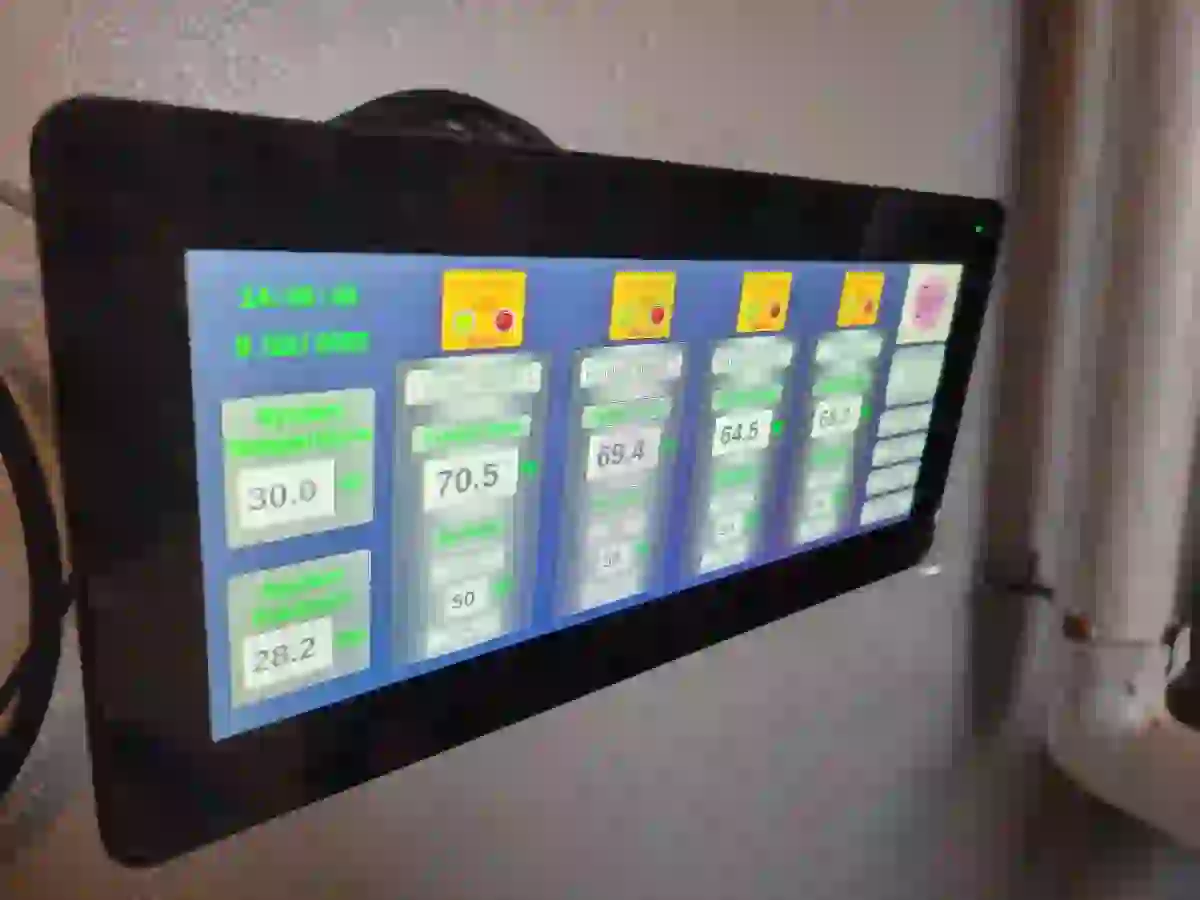
Winery automation is how a cellar keeps every tank on plan when harvest stacks them all at once, applying the controls discipline ISA documents for process industries. During harvest, every tank ferments at once and none of them wait their turn. If temperature control means someone walking the cellar with a flashlight, your vintage depends on how often that walk happens and what got missed between rounds. An active red ferment can run away in the hours between checks, and the wine tells you about it later.
This guide covers what automation involves in a winery: the control layers from tank probes to records, where they pay off first through crush, how we scope and deliver the work, and when the spend makes sense against your tank count and growth plan.
Where Manual Cellar Operation Breaks Down
Fermentation is an exothermic process being managed by hand in most small cellars. A jacket valve opened by feel cools the tank it is on and starves the loop for the three tanks behind it. Chillers short-cycle because zones open and close with no coordination, which costs energy all season and compressor life over years. A transfer mistake during the busiest week of the year drains a lot you spent eleven months growing.
The records gap costs you twice: once when you cannot show a buyer or auditor how a lot was handled, and again when you cannot reconstruct what made last year’s best tank behave the way it did. Consistency starts with data you actually captured.

The Control Stack for a Working Cellar
Winery automation is a stack: tank probes measure, the PLC coordinates jackets and glycol, valves act, the HMI gives your cellar one screen for every tank, and the historian writes the vintage down.
We design it around harvest reality. The system has to be simple enough to trust at 2 a.m. during crush, and useful enough that your team stops carrying the tank map in their heads.
The Six Layers of Winery Automation
01 field instruments
Measurement
Tank-mounted temperature probes per fermenter, glycol loop supply and return temperatures, and level where tanks and transfers need accounting. Barrel room temperature and humidity where storage matters.
02 plc logic
Control Logic
Per-tank setpoint schedules by lot, jacket zone coordination, chiller staging, cold stabilization holds, and CIP sequences. Pump-over and punch-down schedules with run logging where the program supports them.
03 hmi
Operator Screens
Every tank on one screen with setpoints, trends, and manual override. Built for a harvest crew, not a control engineer.
04 actuation
Valves and Outputs
Automated glycol zone valves on jacketed tanks, chiller staging outputs, and transfer permissives where plumbing and risk justify them.
05 alarms
Alarms That Mean Something
Exotherm and deviation alarms with sensible deadbands, escalation to phones during harvest, and an alarm list short enough that every entry gets action.
06 records
Lot Data and Records
Logged fermentation curves, additions windows, transfers, and holds. The vintage record your future blending decisions and compliance answers come from.
installed work
Controls Delivered on Working Production Floors
These photos are from Solon installation and commissioning work in beverage plants: operator control stations, panel wiring, and commissioning in progress. A winery control stack uses the same instruments, controllers, and discipline, scaled to your cellar.


Where Automation Pays Off in a Winery
We sequence the work by fruit risk and payback. In most cellars it lands in this order:
| Cellar problem | With controls |
|---|---|
| Runaway ferment discovered on the morning walk | Exotherm alarms and automatic jacket response overnight |
| Chillers short-cycling through harvest | Staged glycol control and lower energy cost |
| A valve alignment mistake drains a lot | Transfer permissives block the path until it is safe |
| Tank checks by flashlight at 2 a.m. | Every tank temperature on one screen, logged |
| CIP done from memory | Repeatable logged cycles per tank and line |
Cooling is usually the first constraint we find. We design glycol systems for wineries and breweries, and the free glycol load calculator gives a first-pass estimate of the load your tank farm actually needs before anyone quotes you a chiller.
How We Scope and Deliver Winery Controls
step 1
Scope Review
We document your tank farm, cooling plant, and existing controls, on site or from drawings. Jacketed tanks with manual valves usually automate without replacing the tanks.
step 2
Specification
We write a vendor-quotable spec covering I/O, instruments, panels, code responsibilities, and acceptance criteria, so integrator bids are comparable.
step 3
Proposal Review
We check returned quotes line by line against the spec before money moves, and flag the scope gaps that otherwise surface mid-harvest.
step 4
FAT, SAT, Startup
We support factory and site acceptance testing through commissioning, timed so the system is proven before fruit arrives.
We work vendor-neutral across common PLC and HMI platforms, including CODESYS-based controllers and IO-Link instrumentation, and we do not sell control hardware, so the specification serves your cellar rather than a product line. Full controls capability across process industries is on our industrial automation consulting page.
When to Bring In Winery Automation Consulting
The strongest entry points are before tanks and chillers are ordered for a new build or expansion, ahead of a harvest your current system cannot cover, and when manual temperature control is costing fruit quality you can taste. If the question is broader than controls, covering site, facility, or process, start with winery consulting and we will route the controls work inside it.
Automation is one layer of cellar performance. For facility planning, equipment, and harvest support from the same team, see our winery consultant practice, and size your cooling loads with the glycol calculator before quoting a chiller.
Winery Automation Questions
Can our existing jacketed tanks be automated?
Usually yes. Jacketed tanks with solenoid or manual valves can move to automated zone valves and tank-mounted temperature probes without replacing the tanks themselves. The controls come to the tanks you own.
How is glycol sizing decided?
Sizing starts from heat load: fermentation exotherm, pull-down requirements, ambient gain, and how many tanks peak at once during harvest. The glycol load calculator gives a first pass; design work confirms it against your real crush schedule.
Does a small winery need SCADA?
Not always. Many cellars run well on a PLC and a panel HMI. SCADA earns its cost when tank count, remote monitoring, or logging requirements outgrow a single screen, and we will tell you plainly if you are not there yet.
To scope winery tank controls or a glycol system, contact Solon Consulting.
Leave a Reply