
Food plant automation carries a duty most industrial controls never face: in a food plant, the control system is also the food-safety record keeper. Every critical control point that FSMA and HACCP require you to monitor is a sensor, an interlock, and a stored record, which makes controls design to ISA practice inseparable from compliance design. Done well, one system runs the line and writes the audit trail at the same time.
This guide covers where manual food plant operation breaks down, the control layers that fix it, and how to scope the work so integrator bids are comparable.
Where Manual Food Plant Operation Breaks Down
A cook temperature logged by hand gets logged from memory on a busy shift. A changeover checklist on a clipboard drifts from what the line actually does. Allergen changeover verification, metal detector checks, and CCP monitoring all degrade the same way: fine on the day the auditor visits, variable the rest of the year. Volume, turnover, and a second shift expose it, and the recall risk lands on the record you cannot produce.
The Control Layers of Food Plant Automation
Instrumentation and CCP monitoring
Temperature, pressure, flow, and level instruments on the points that matter, starting with every critical control point in the food-safety plan. If the plan requires monitoring it, the control system should measure it, alarm it, and store it.
Interlocks and sequencing
Cook cannot start below temperature, packaging cannot run through a failed check, cleaning and production paths cannot connect. Interlocks turn procedures into physics.
Recipe and changeover control
Product parameters held as recipes, allergen changeovers sequenced with verification steps, and line settings loaded by selection rather than memory. Changeover time drops as a side effect of doing it safely.
Records, reporting, and traceability
CCP logs, batch records, and lot genealogy written by the historian as production runs, aligned with the record requirements in FSMA.
Controls Delivered on Working Production Floors
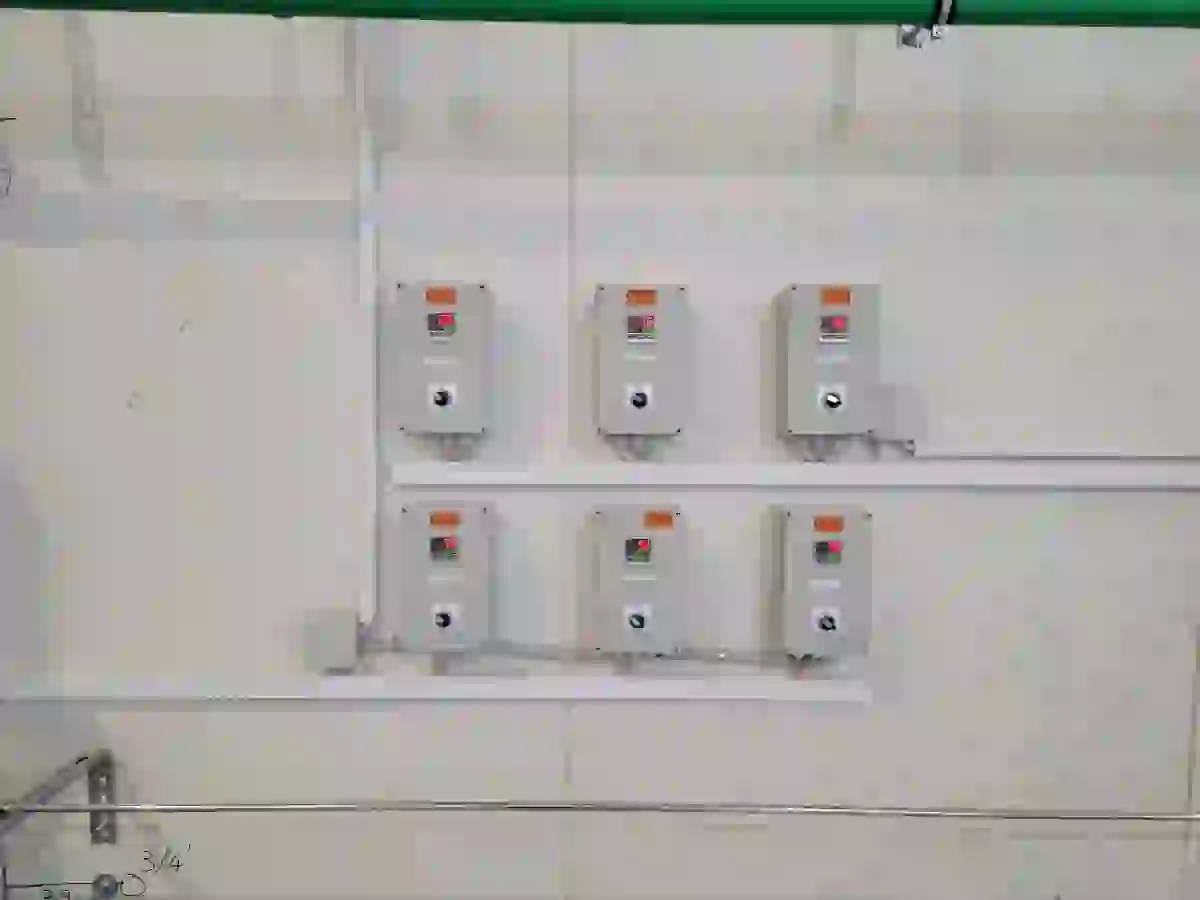
These photos are from Solon controls work in production plants: panel builds, PLC wiring, operator interfaces, and power distribution. Food plant automation uses the same hardware stack, with sanitation-rated enclosures and food-safety records added to the scope.


Where Food Plant Automation Pays Off First
Run the numbers with our automation ROI guide before believing any vendor’s payback slide.
How We Scope and Deliver
Solon works the owner’s side of food plant automation: instrument list and control narrative first, panel and network architecture second, then integrator bid packages, code and submittal review, and commissioning with the food-safety plan open on the table. Start with the automation scope checklist, and see the full practice on our industrial automation consulting page.
Food Plant Automation Questions
Does automation replace our HACCP monitoring team?
It replaces the clipboard, not the accountability. Trained people still own the food-safety plan; the control system gives them continuous measurement, forced verification steps, and records that exist whether the shift was calm or chaotic.
Our lines are older equipment from mixed vendors. Is that a problem?
It is the normal case. Mixed-vendor lines need an interface schedule that defines every handshake between machines, owned by the plant rather than any one OEM.
What does a food plant automation project cost?
Scope drives it: instrument count, panel count, and integration hours. The owner-side work that defines that scope is the difference between comparable bids and open-ended change orders.
For the neighboring disciplines, see food process engineering and our FSMA compliance guide.